About Jonathan P. Morrow
The Operator.
The Strategist.
The Systems Engineer.
Jonathan P. Morrow writes and speaks about the American Experiment as a balanced constitutional system, one that is failing not because of a single party, but because its foundational principles have drifted dangerously out of alignment.
His work sits at the intersection of history, political philosophy, and institutional design. It is grounded in a rigorous, "hard-nosed" reality: that the American system was never guaranteed success; it was a deliberate attempt to balance competing principles of freedom and power, a balance that is now breaking down. That work shaped how he thinks about systems, not as abstract ideas, but as structures that directly impact people’s lives.

A Perspective Shaped by Service and Structure
Jonathan’s perspective is forged by real-world experience inside high-consequence systems.
The Navy Veteran: He served as a U.S. Navy submarine officer, where he first observed that his oath was not to a person or a party, but to a document: the Constitution. This sparked a career-long study into the Enlightenment philosophers and the structural origins of the Republic.
The Business Leader: Following his military service, he became a senior leader and strategist within global technology companies, advising on execution, governance, and long-term value creation.
The Advocate: As a veteran benefits consultant, he helped former service members navigate the complex federal systems they earned, reinforcing his belief that institutions must function for the people they are designed to serve.
Across every environment, one theme remained consistent: Systems only work when the principles they are built on remain aligned.

Why This Work Matters
Most modern histories interpret the American story through the lens of power, race, or class.
Jonathan approaches it through a Structural Analytical Framework.
He asks a different question:
What happens when the foundational principles of the republic fall out of balance?
By treating the founding ideals as a meaningful philosophical system rather than mere rhetoric, his work provides a Constitutional argument, not just a moral critique.
A Different Kind of Analysis
Jonathan does not write "grievance history" or reinforce existing partisan narratives. He provides a framework for structural diagnosis.
Individual Liberty:
The freedom of the person from state coercion.
His work focuses on the four pillars of the American system:
Limited Government:
The essential boundaries of institutional power.
Popular Sovereignty:
The power of the people to govern themselves.
The goal is to provide moral clarity without hysteria. By understanding where these principles have drifted, we can begin the "generational work" of restoration.
Economic Liberty:
The structural freedom of the marketplace.
Beyond the First Book
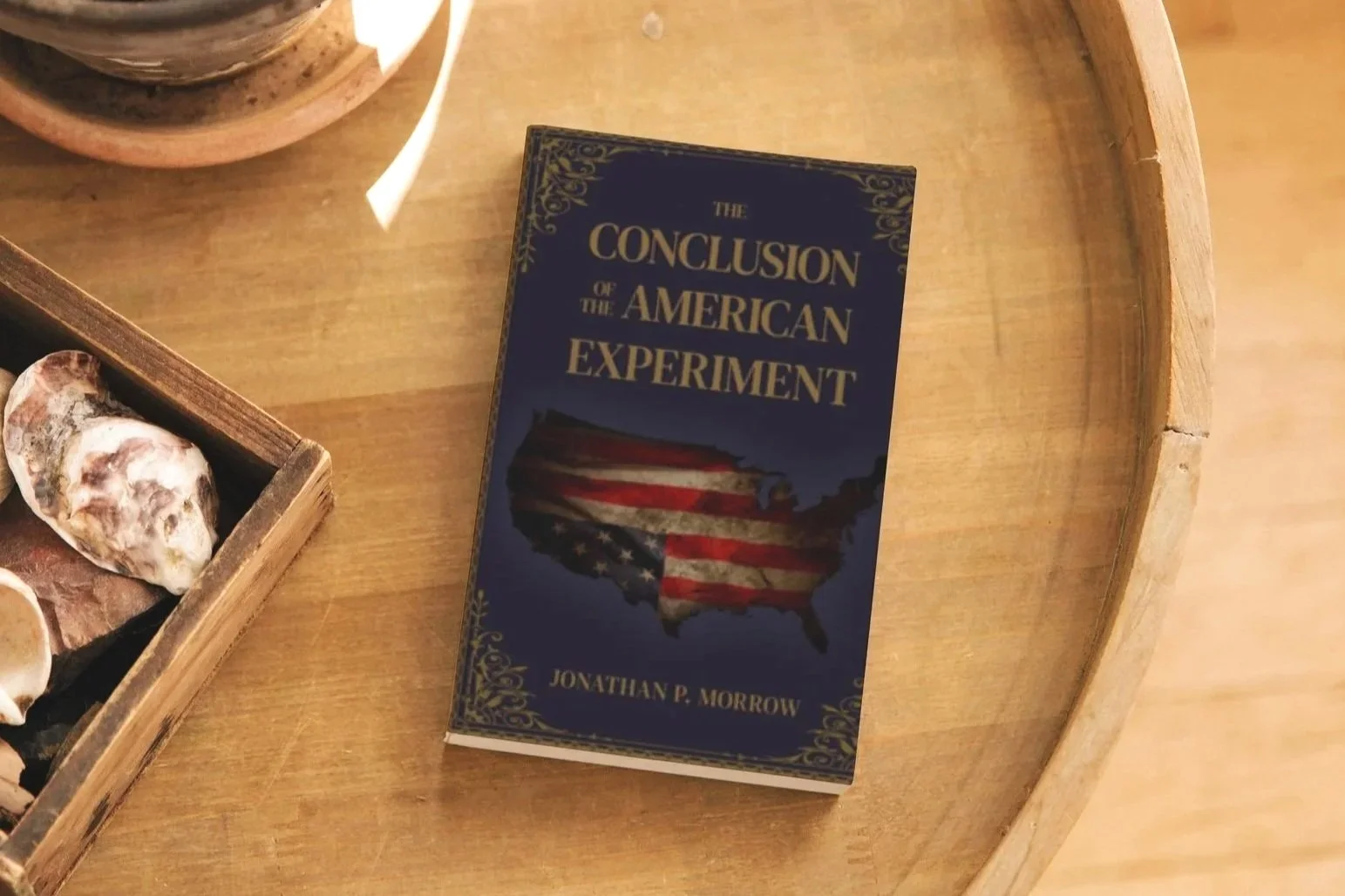
Jonathan’s first book traces the long arc of these principles from the founding through the rise of industrial capitalism to the modern political era.
His ongoing work and the Good Morrow Leadership Institute move from diagnosis toward a "Five Amendment Solution,” bridging the gap between political philosophy and institutional stability.
Looking Ahead
In addition to his writing, Jonathan is a university speaker and podcast contributor dedicated to:
Civic Literacy: Helping "intellectually serious" readers understand how history supports modern progressivism.
Institutional Governance: Advising organizations on aligning their structures with the principles they claim to uphold.
Patriotism Reframed: Reclaiming the concept of patriotism through structural honesty.